The magnetic force of magnetic mold clamping plates mainly comes from high-performance permanent magnet materials, among which AlNiCo and NdFeB are the most commonly used. After being magnetized by an external magnetic field, these permanent magnets can retain magnetism for a long time, generating a strong magnetic field on the working surface of the magnetic mold plate to attract and fix molds.
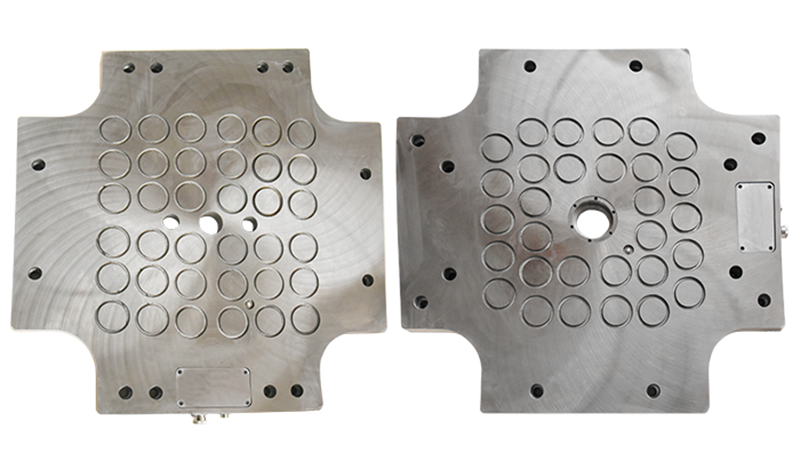
AlNiCo: It is a traditional permanent magnet material featuring high coercivity and excellent temperature stability, and can maintain magnetism at relatively high temperatures. Nevertheless, its magnetic energy product (magnetic energy stored per unit volume) is relatively low, so a larger size may be required to achieve the required magnetic force.
NdFeB: NdFeB is one of the strongest permanent magnet materials available on the market, with high magnetic energy product and coercivity. It can produce powerful magnetic fields within a compact volume, making it ideal for magnetic mold plates and other applications requiring high magnetic force. However, NdFeB has a relatively low Curie temperature (the critical temperature at which magnetism disappears), so extra caution is required when used in high-temperature environments.
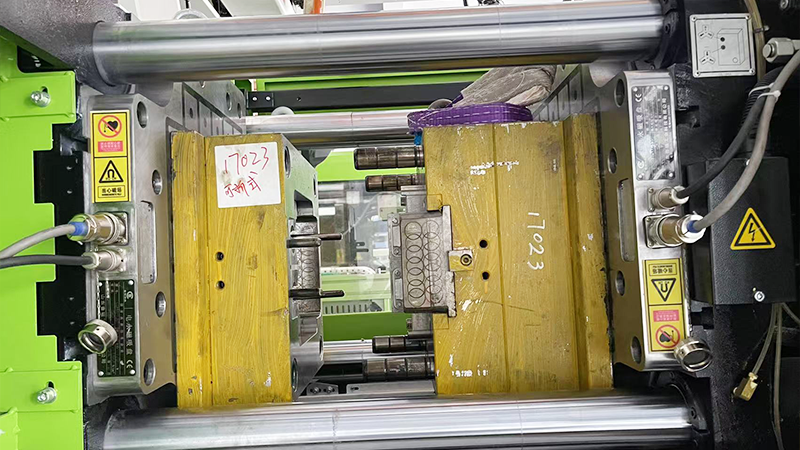
During operation, the electronic control system regulates the distribution of internal magnetic flux lines and switches magnetic fields to balance the superimposed magnetic field inside the system. In the magnetized state, a strong magnetic field appears on the working surface to hold the mold firmly. In the demagnetized state, the magnetic field disappears, and the mold can be removed easily. Such magnetic mold plates deliver fast mold change, high safety and stable clamping force, and are widely used on injection molding machines, stamping presses and other equipment.


 w.eric@lucimagnet.com