Special precautions must be taken when using electro-permanent magnetic lifting tools to lift steel plates of varying thicknesses.
For thin steel plates, their relatively low inherent strength makes them prone to deformation during lifting. Therefore, when selecting an electro-permanent magnetic lifting tool, ensure uniform magnetic force distribution to prevent local excessive magnetic force which causes uneven stress and plate deformation. Meanwhile, the lifting speed should be appropriately reduced to minimize the impact of inertial force on the steel plate.
Thick steel plates are usually heavy, which requires the electro-permanent magnetic lifting tool to generate sufficient magnetic force to bear the load. Before lifting, carefully verify whether the magnetic force of the lifting tool meets requirements, and pay attention to the contact area between magnetic poles and steel plates to guarantee full function of magnetic force.
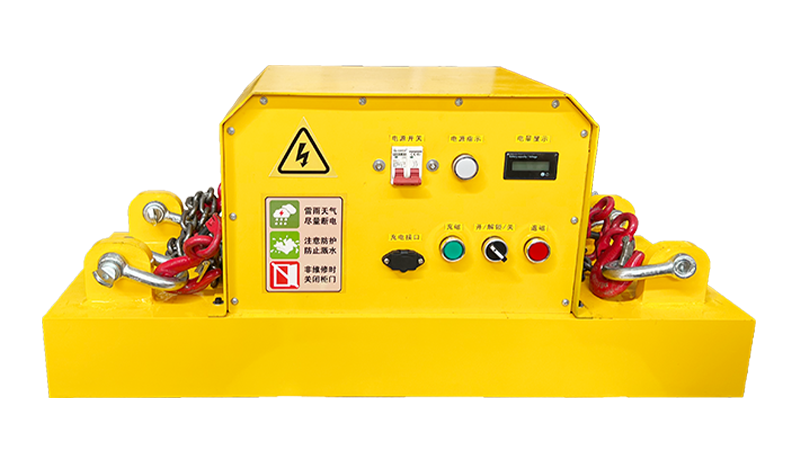
In addition, for both thin and thick steel plates, the center of gravity of the plate shall be noted. Accurately identify the center of gravity before lifting, and align the magnetic action points of the electro-permanent magnetic lifting tool with the center of gravity to maintain stability throughout lifting.
Extra caution is required when lifting steel plates with large thickness differences at the same time. Steel plates of different thicknesses differ in weight and gravity distribution, which may lead to imbalance during lifting. In such cases, grouped lifting or additional auxiliary supports can be adopted to ensure safety.
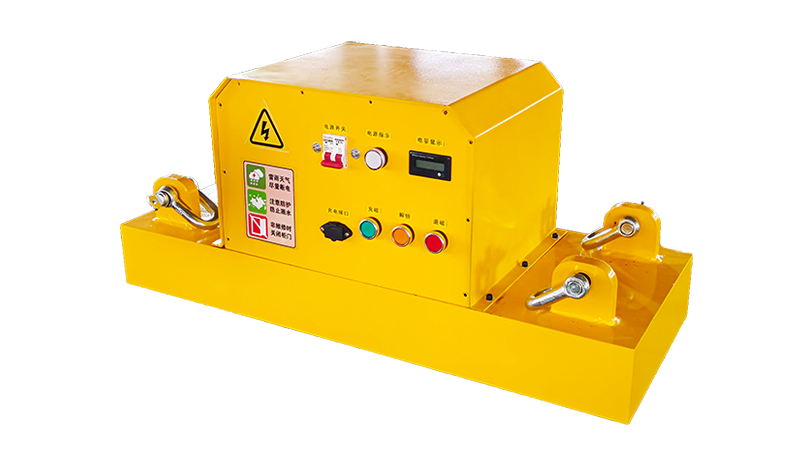
When switching to lifting steel plates of different thicknesses, re-adjust and inspect the electro-permanent magnetic lifting tool to adapt to the new lifting task.
In conclusion, lifting steel plates of different thicknesses requires comprehensive consideration based on their characteristics, including tool selection, commissioning, gravity judgment and operating methods, so as to ensure safe and smooth lifting operations.


 w.eric@lucimagnet.com