The remote control of lifting electromagnets mainly relies on advanced control systems and communication technologies. Below are the key components and procedures for its realization:
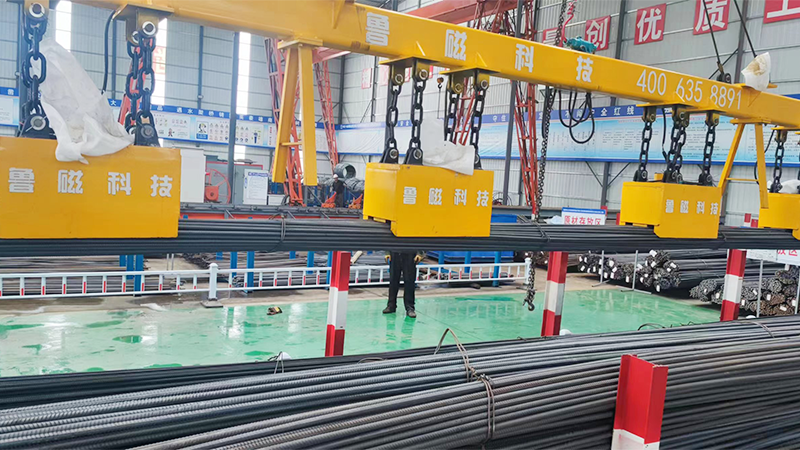
Control System Design
Core control unit: High-performance controllers or PLCs (Programmable Logic Controllers) serve as the core, receiving remote commands and controlling magnet switching and magnetic force adjustment.
Communication interfaces: The controller is equipped with multiple interfaces such as RS232, RS485 and Ethernet for data transmission with remote terminals.
Communication Technologies
Wireless communication: Wi-Fi, 4G/5G, Zigbee and other wireless technologies establish connections between the lifting electromagnet and remote terminals, suitable for mobile operation and remote monitoring.
Wired communication: Optical fiber and cables are adopted for wired remote control in certain scenarios. It delivers stable transmission yet is limited by wiring layout.
Remote Control Software and Platforms
Dedicated control software: Special software installed on remote terminals including PCs, mobile phones and tablets allows operators to check real-time status and send control commands.
Cloud platform: The control system connects to the cloud platform for remote monitoring and management. The cloud platform supports data storage, analysis and alarm functions to facilitate equipment management and improve productivity.
Remote Control Workflow
Connection establishment: A link is built between the lifting electromagnet and remote terminal via wired or wireless communication.
Command transmission: Operators send control commands from remote terminals to the control system through communication networks.
Command execution: The control system interprets commands and performs corresponding actions such as magnet energization/de-energization and magnetic force regulation.
Status feedback: The control system returns real-time operating status to the remote terminal for operator reference.
Safety Measures
Authority management: Access control is implemented for remote terminals to ensure only authorized personnel can operate the lifting electromagnet.
Data encryption: Transmitted data is encrypted to prevent leakage and tampering.
Abnormal alarm: The control system is configured with alarm functions to notify operators promptly and trigger response actions once faults occur.
Application Scenarios
Remote-controlled lifting electromagnets are widely used in industrial automation, intelligent manufacturing, logistics and warehousing. For automated production lines, they realize precise material handling and positioning. In logistics warehouses, they support fast sorting and storage of goods.
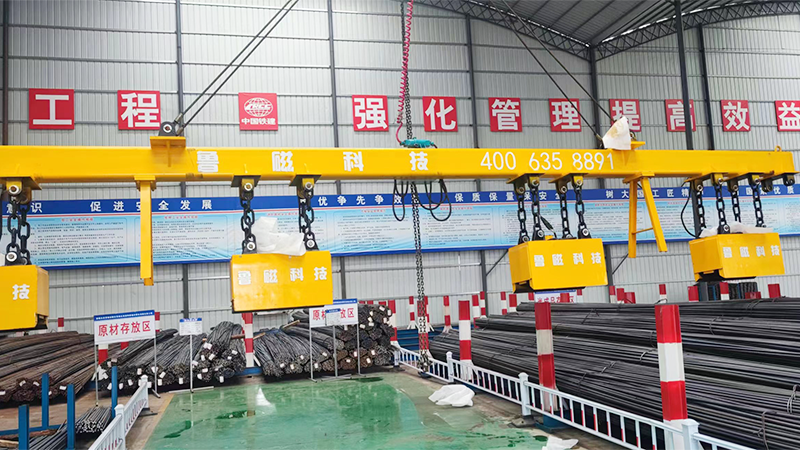
In conclusion, remote control of lifting electromagnets is realized by advanced control systems and communication technologies. Remote monitoring and operation help boost efficiency, cut labor costs and guarantee safe and stable equipment running.


 w.eric@lucimagnet.com